
ARKEOS: Real Estate, Unlocked by a New Generation
Inflation wins. Savings accounts and euro-denominated funds no longer offer real protection. Their returns trail behind rising prices, comforting on the surface, but eroding value over time. The outcome? Many young people save, but they don’t really invest. That’s why diversification is no longer optional: stocks, bonds, ETFs, crypto… All are tools to build a […]

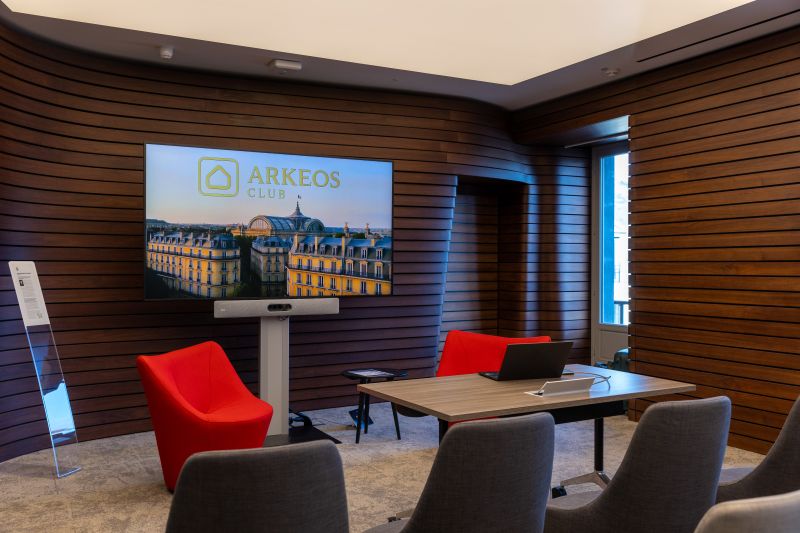
Inflation wins. Savings accounts and euro-denominated funds no longer offer real protection. Their returns trail behind rising prices, comforting on the surface, but eroding value over time. The outcome? Many young people save, but they don’t really invest.
That’s why diversification is no longer optional: stocks, bonds, ETFs, crypto… All are tools to build a balanced portfolio tailored to one’s risk profile. Yet these assets, often abstract or volatile, rarely satisfy the growing demand among new investors for something tangible.
Real estate makes the difference. A concrete, time-tested asset, globally trusted and remarkably resilient, it stands as a cornerstone of any long-term strategy. Still, for beginners, investing in property is no easy feat: it requires capital, knowledge, time and above all, the ability to convince a bank.
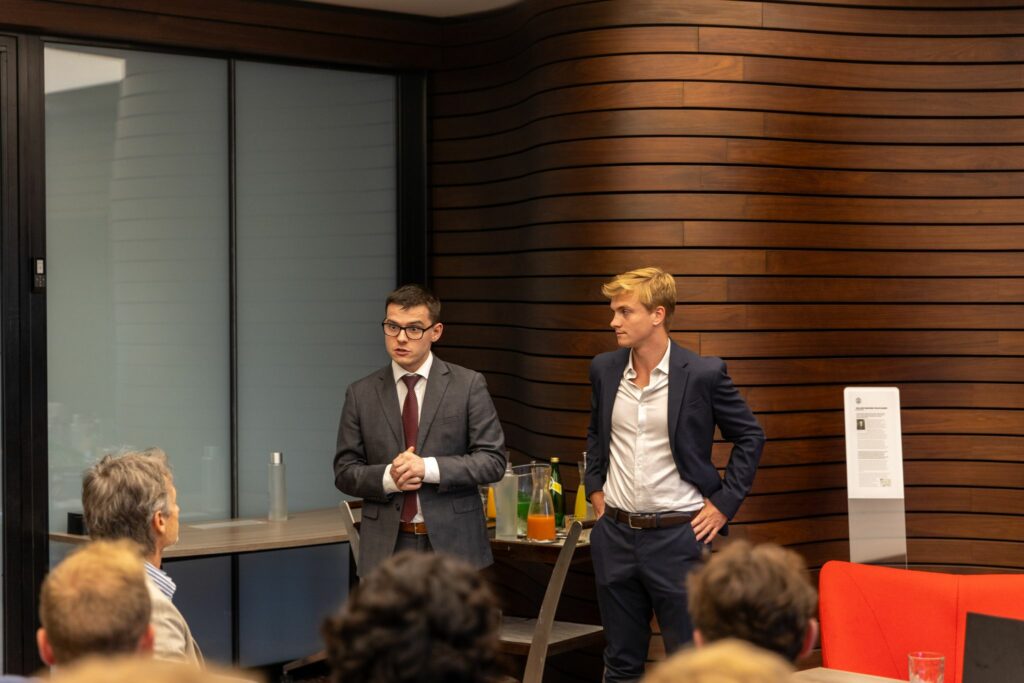
On Wednesday, September 25, ARKEOS held its 4th presentation evening, drawing nearly 80 participants; mostly students and young professionals. Behind the project are four founders: Pierre Louis Richard, Clément Vignard, Théophile Williamson and Enzo Tirard-Favard. All share a passion for real estate and a determination to “break the codes” of a sector often seen as closed off.
Breaking those codes means avoiding the traditional path of REITs or “paper real estate.” Instead, its model is built on the club deal: members invest collectively in tangible projects, each deal structured through a dedicated real estate investment company (SCI). The goal is clear. Involve investors directly and make them active players rather than mere providers of capital.
That hands-on approach translates into two to three operations a year, with deal sourcing led by two of the co-founders already active in Bourgogne, France. They showcased the various investments they’ve carried out in the region. Different in style but united by the same passion, the duo managed to pass on their enthusiasm for real estate to the audience.
Enzo Tirard and Théophile Williamson show two sides of the same coin. One hunts down properties that need work, renovates them himself, and boosts their value before renting. The other goes straight for turnkey apartments, cashing in rental income from day one.
Both agree on one thing: bank credit is the real game-changer. Their knack for stacking loans (even as work-study students) left the audience impressed, raising as many eyebrows as it did questions.
Joining ARKEOS won’t be free. From November 2025, members will pay a €300 fee. The project’s first real test: can it turn curiosity into commitment before the initial co-investments expected in January 2026? Backing is already strong, with an online community gathered around Pierre Louis Richard and nearly 120 young people, average age 23, who have signaled their interest.
At the heart of ARKEOS’s pitch are three promises. First, accessibility. Lowering the entry ticket and pooling risks. Second, learning. Offering hands-on experience in real estate investment, from scouting a property to managing rentals. And third, community. Moving forward together, sharing lessons, and tapping into a network of professionals: agents, notaries, craftsmen, financial partners.
The founders also made it clear they’re not lacking ambition or heavyweight support. Two high-profile guests joined the evening:
Guillaume de Martel, CEO of SG Investment Solutions France, a €30 billion asset management arm of Société Générale. He laid out a panorama of existing investment solutions, from the most traditional to crypto-assets, before leading the transition to ARKEOS’s real estate project. Presented as a smart diversification play.
Philippe de Martel, Investment Manager at AXA IM Real Assets, shared insights from the institutional side. He delivered two key messages: a warning against the common cognitive biases of young investors (emotional attachment, risk underestimation, the Dunning-Kruger effect), and a spotlight on tools such as sales with right of redemption allowing owners to unlock liquidity while continuing to use their property.
In a context where diversifying one’s portfolio has become essential, does ARKEOS offer a collective approach to integrating real estate alongside stocks, bonds, ETFs, crypto, and other investments?
At this stage, no concrete investment has yet been launched: the announced operations are, for now, only projections. The returns, presented in gross terms, do not yet account for actual fees or margins. During the evening, a young wealth management professional highlighted “the lack of clarity regarding net profitability and the exit strategy.” A similar concern was voiced by a young consultant from Braxton, who told us he was waiting for more detailed information about taxation and exit conditions before committing. The questions surrounding the legal structure (SCI vs. commercial company), taxation, and resale terms remain open.
So, with ARKEOS / bold bet or enticing mirage?

The ambition to open real estate access to a generation often excluded from the market is undeniably bold. ARKEOS’s strength lies in its ability to speak directly to students and young professionals, to establish a reassuring collective framework, and to propose an approach that breaks away from traditional investment vehicles.
But the challenges remain significant: proving the net profitability of projects, clarifying tax implications, and above all, converting expressed interest into real financial commitments by 2026. That will be the moment when we’ll see whether ARKEOS can evolve from an enthusiastic community into a genuine real estate investment player.
At Onoris Journal, we’ll be closely following this venture within our VC & Startup department, as it exemplifies a growing trend: the rise of hybrid solutions at the crossroads of finance, real estate, and education. Designed by and for young investors.
The question remains: will ARKEOS succeed in turning a curious community into a new generation of real estate investors? We’ll have the answer as early as January 2026.