
Hugo Mendes: a different kind of VC investor with Clover, the fund dedicated to the Future of Work
WhatsApp instead of LinkedIn. 48 hours instead of 6 months. At 27, Hugo Mendes manages an early-stage fund and is shaking up the rules of venture capital.

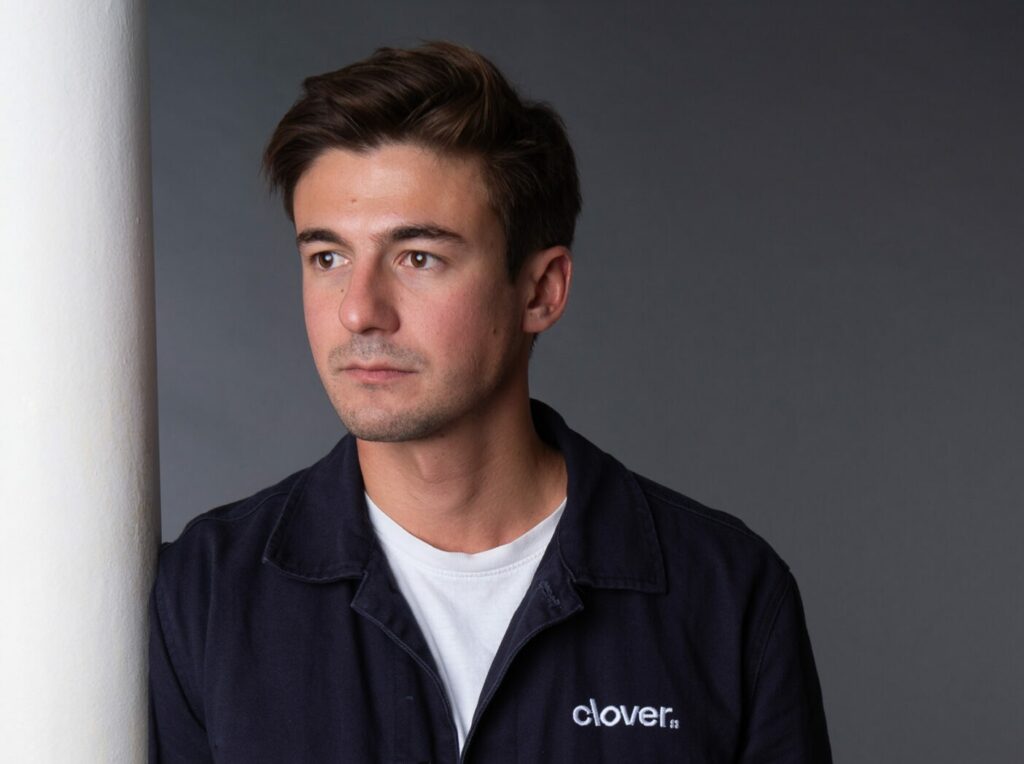
Hugo Mendes doesn’t play the card of the self-assured young prodigy. At 27, he lays his uncertainties on the table with the same frankness with which he shares his vision for Clover, the fund dedicated to the Future of Work. Since its launch, eight deals have been closed with tickets ranging from €100,000 to €200,000. His promise stands out in the hushed world of venture capital: to make Clover a startup that invests in startups. Agility, transparency, proximity to founders. Here, we respond to everyone, we communicate via WhatsApp, and we create value even before signing the check.
His career path traces a map of the world: Brazil, Canada, Berlin, Origins alongside Blaise Matuidi, then founder of Clover at the age of 27. A common thread runs through his resume: always be open to meeting the right people at the right time, mix tech and finance, and maintain an international perspective. He launched his first company because he spoke to the right person at the right time. This philosophy now infuses his approach to investing.
But the real question remains: how did a 27-year-old convince Samuel Tual, a seasoned entrepreneur and founder of Actual Group, to entrust him with the reins of a family office?
From Brazil to Clover: a journey guided by encounters
Hugo has always tried to find the common thread. It was more of a quest than a career plan. His initial convictions crystallized early on: work in tech and finance, travel, and maintain an international perspective that shapes different points of view. His time at Origins, alongside Blaise Matuidi, marked a turning point. It was there that he gradually shifted from operations to investment, learning how to source, evaluate, and build a network. But above all, it was there that he began to shape his own vision of VC: what if we could do things differently?
At 27 years old, convincing a seasoned entrepreneur to entrust you with their family office is a daunting task. Samuel Tual, founder of Actual Group, wasn’t going to settle for a simple resume. Hugo convinced him on three key points. First, a clear vision of modern VC: why engage in venture capital in 2024-2025 if not to challenge the existing codes? VC must step outside its comfort zone, become more agile, more transparent, and closer to founders. Next, a differentiating thesis: the Future of Work is not a buzzword at Clover, it is a defined territory. How technology is transforming work, from agentic AI to new productivity tools. Hugo brings clear expertise that is valuable to entrepreneurs. Finally, we had to prove that we could deliver despite our age. We had to demonstrate our ability to execute, our rigor, and our existing network. And we had to create a network of venture partners to compensate for the gaps.
Clover’s setup is a game changer. Whereas a traditional fund has to deal with ninety limited partners with differing expectations, Clover has only one: Samuel Tual. The implications are huge. Quick decisions without an investment committee. Total alignment on a single vision. Flexibility to experiment and iterate on the model. Focus on founders rather than political reporting. This structure allows to deliver on their « fast, loud, bold » promise without the friction of multi-LP funds.
And, the ambition doesn’t stop at Europe. Clover wants to invest in the United States, capitalizing on the international DNA that has been part of Hugo’s journey from the beginning.
Future of Work: a thesis that resonates with entrepreneurs
The Future of Work sells dreams everywhere. At Clover, it’s more than just a word. Hugo defines it as expertise that is valuable to entrepreneurs: how technology impacts the world of work. Agentic AI, productivity transformation, new modes of collaboration. The timing is strategic in 2025.
Clover’s approach is based on four pillars. First, the future of employment: freelancing, the gig economy, wage portage, everything that redefines the employer-employee relationship. The fund invests in platforms that facilitate freelance work or enable companies to better manage their flexible talent.
Next, productivity and efficiency: collaboration tools, automation solutions, everything that enables people to work better and faster. From AI to automate repetitive tasks to next-generation project management platforms.
The third pillar concerns upskilling and reskilling. With AI disrupting all professions, continuing education is becoming crucial. Clover is interested in edtech companies that train people in the skills of tomorrow, but also in platforms that enable companies to map the skills of their teams.
Finally, there is corporate culture and well-being: remote work, new management styles, mental health at work. These are issues that HR departments need to address now.
This framework allows Clover to filter opportunities. Hugo is not looking to invest in « yet another tool. » He is looking for companies that solve real problems, with a clear vision of the impact they want to have.
Beyond the thesis, Clover has unique assets. When a portfolio needs to understand how an HR department in a large company really works, Clover can open the right doors: Samuel Tual’s experience. But also, his network which opens up other opportunities: MEDEF, venture partners, corporate connections. A network that provides access to early customers, beta testers, and first contracts. The model is unique: part of the deal flow comes from entrepreneurs in whom Clover has not invested. This is a massive vote of confidence that proves that the value created goes beyond the check.
Fast, loud, bold: a philosophy that translates into everyday life
Clover’s philosophy can be summed up in three words: fast, loud, bold. Fast, because Hugo is convinced that the best deals are made quickly. When a founder raises funds, they need money now, not in six months. Clover makes a decision within 48 hours. If the decision cannot be made quickly, it means the deal is not for them.
Loud, because communication is at the heart of the relationship. Hugo prefers a direct WhatsApp message to a formal exchange on LinkedIn. All exchanges with founders take place via WhatsApp. It’s more human, faster, and creates a real sense of closeness. This approach contrasts with traditional VC codes, where interactions are often cold and distant.
Bold, finally, because Clover isn’t afraid to take risks. Investing in pre-seed companies, which sometimes have nothing more than an MVP and a vision, requires courage. You have to bet on people, not just metrics. This philosophy translates into tickets ranging from €100,000 to €200,000, quick decisions, and hands-on support from the very first exchanges. Clover doesn’t just provide capital. The fund helps founders structure their pitch, refine their go-to-market strategy, and recruit. And all of this is done before the check is even signed.
Hugo sees forty people a week. To stand out in this flow, you have to understand his preferences. Events remain the best channel. Meeting in person creates a connection that is impossible to replicate behind a screen. Email is still more effective than LinkedIn, where messages pile up without response. The winning formula can be summed up as follows: a joke to grab attention and show your personality, the project in two or three lines maximum with the problem, the solution, and traction if it exists, and a Calendly link to make it easy to get in touch. Emails that work are those that make people smile while getting straight to the point.
Hugo responds to all emails. Always. Even if it’s to say no. He has promised himself to respond to everyone. The VC must not remain a black box.
How Clover evaluates deals: the 4 O framework
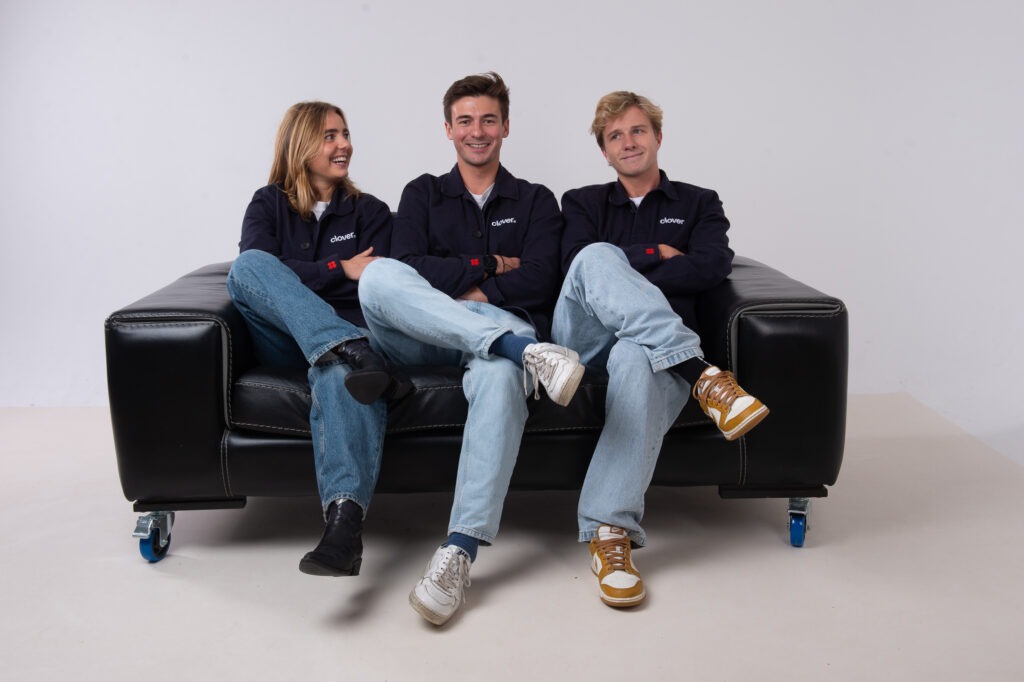
With forty meetings a week, Hugo has structured his assessment grid around four criteria. First, Outstanding Founders. Clover invests in people before investing in ideas. An outstanding founder is someone who is obsessed, capable of execution, and authentic in their founder-market fit. Hugo looks for people who can’t help but do what they do.
Next is Opportunity Creation. Does this startup really create a new opportunity, or is it just another me-too in a saturated market? Clover wants companies that open doors, not ones that fight for a slice of an existing pie.
The third O is product obsession. The product must be at the center. Founders who spend more time pitching than coding worry Hugo. He is looking for builders, people who iterate quickly and have a clear product vision.
The final O stands for Operational Edge. Not the startup’s defensibility, but the concrete value Clover brings to the founders it backs. The team delivers the kind of operational firepower that accelerates a team’s trajectory from idea to impact.
With tickets ranging from €100,000 to €200,000, Clover targets relatively small ownership stakes. The goal is not to own the company, but to be useful. For follow-on investments, there is no mandatory reinvestment and no set duration. This approach may seem surprising, but it can be explained by the logic of a family office. Clover invests when it makes sense, not because it needs to defend its ownership stake. If the company performs well, so much the better. If it needs the fund for the next round, it will be there. Otherwise, the capital is freed up for other deals. This flexibility appeals to founders: no artificial pressure to raise funds too early, no investors imposing a round because they want to protect their share.
Common fundraising mistakes
After seeing dozens of pitches every week, Hugo has identified recurring patterns of mistakes. The first is pitching the solution before the problem. Too many founders talk about their technology for ten minutes before we understand what problem they are solving. You have to start with the why.
The second mistake is the perfect business plan syndrome. Waiting until everything is perfect before raising funds. Pre-seed funding is not an exact science. Clover is looking for people who move fast, not planners.
The third common mistake is neglecting founder-market fit. Telling a great story without showing why you are the right person to solve this specific problem. Authenticity matters.
Final mistake: not asking for help. Believing that you have to do everything yourself. The best founders know how to surround themselves with the right people, ask for introductions, and activate their network.
Dealing with imposter syndrome at 27
How do you deal with imposter syndrome when you’re 27, supervising a team, and trusted by Samuel Tual at a family office? Hugo doesn’t dodge the issue. First, by talking about it. Then, by admitting that you don’t know everything. By surrounding himself with people who are smarter than him on certain subjects. And by focusing on execution rather than anxiety.
The transition from solo GP to small team amplified the challenge. Delegating remains difficult, especially when you’re used to doing everything yourself. But it’s necessary if you want to scale. Hugo’s advice? Accept that imposter syndrome never really goes away. It evolves. Today, he no longer wonders if he can do the job. He wonders if he’s doing it well. That’s already progress.
Advice for early-stage founders
Hugo sums up his vision in a few principles.
Focus on the product rather than fundraising. The best founders spend 80% of their time on the product and 20% on fundraising. Not the other way around.
At pre-seed & seed, timing beats long term relationship building. VCs review dozens of similar opportunities every week; if you show up too early, by the time you return with a real ask, they’ve already seen ten companies in your space. At this stage, founders shouldn’t warm up investors months in advance. They should approach them when they’re ready, sharp, and fundraise ready. Early stage capital rewards momentum, not slow burn networking.
Ask for feedback even if you get a rejection. A no can become a yes six months later if you show that you’re executing. But only if you stay in touch and show that you’re making progress.
Final thoughts
Clover has only been around for a few months, but the challenge is on: to prove that it’s possible to invest differently, faster, and closer to the founders. And if Hugo succeeds in his challenge, he won’t just be an investor. He will have become a catalyst for the European Future of Work ecosystem.
And we’re not speaking in theory. Clover has already closed eight deals by backing founders at the exact moment when timing, clarity and momentum align. In early stage investing, precision beats noise & the results speak for themselves.